Book Two of The Blackchapel Chronicles is Creeping its Way onto Google Play
Yes it’s true, and no you’re not dreaming; Book Two (A Drowning of Mermaids) really is in its final stages of production – it has a front cover and everything.
Getting this one over the line is proving to be the toughest project I’ve ever worked on. Compared with Book One (A Plague of Murder), its world-building is more complex, the action more hard-hitting, and the consequences of characters’ decisions more heart-breaking.
Beginning immediately where A Plague of Murder ended (and you can get your own free copy of that book here), A Drowning of Mermaids covers a terrifying murder case from 1871. Based on actual case files from the time, it continues Jack the Ripper’s origin story, and follows the London detectives who are destined to chase him through the infamous autumn of 1888.
Without spoiling either Book One or Two, I can honestly say the reason this book has taken so much longer than I originally expected is thanks to the weight I feel to do the characters justice and to keep writing better stories for my readers. I believe any work of fiction exists first and foremost to entertain. My goal with any of my books is to pluck a reader from their surroundings and drop them in a time and place that exists only in their imagination.
And a big part of that process is authenticity.
This second book contains a tonne of intricate details that make up the world and help bring it to life from the page; whether its the location of real buildings and their floor plans, biographies of historical characters, or details on the various communities that made up Whitechapel back in the 1870’s. The greatest challenge of all this is to make it invisible when reading. Like a magician guarding their secrets, I have to scatter these authentic details lightly throughout the book to keep it a page turning ride and not a boring slog!
A Drowning of Mermaids also sees the return of our favourite characters who survived A Plague of Murder, and after an initial stop/start writing process, I felt like I was meeting up with old friends as I continued their stories and motivations. But make no mistake, this is not a humdrum sequel that treads water (no pun intended). Heartbreak drapes itself heavily over this book, and no main character is safe from their own actions (or the actions of others). The oft-used term ‘plot-armour’ does not exist in this series, and some outcomes may shock you. After all, Victorian London was as brutal and nasty a place for the destitute as it was a luxurious playground for those in wealth and power. And at both ends of the scale, death could arrive as quick as a knife in the dark.
As always, I am immensely grateful to all those who come across this humble website and decide to grab a copy of any of my works (did i mention they were available for free?). You are the reason I write.
Of those passengers and crew who were lucky enough to escape the disaster alive, none have a story so downright intriguing as the ship’s chief baker, Charles John Joughin
Charles John Joughin, circa 1912
From the moment the Titanic struck the iceberg in the final minutes of 14th April 1912, Joughin’s otherwise normal life changed forever. Employed as the ship’s chief baker catering for many hundreds of passengers, he became an unlikely hero through his many and varied actions across a huge swathe of the ship. His incredible story reads like a Hollywood script, and his actions on that fateful night of the sinking can only make a person wonder at what they would do if they were spending the final hours on a doomed, majestic cruise liner with access to sumptuous first class facilities, and an inexhaustible supply of first class liquor.
Charles Joughin enjoying a cheeky drink while the ship sinks. Character played by George Rose in A Night To Remember, 1958
As Chief Baker, Joughin had responsibility for thirteen bakers, all catering for the ship’s hungry passengers. At the time of the collision, he was tucked up in bed in his own quarters on E Deck. Roused from sleep by a combination of the impact and hurried feet shuffling out in the corridor, he emerged from his room to hear a general order go out for the lifeboats to be provisioned.
Knowing he had a bakery full of fresh loaves ready for morning breakfast, Joughin ordered his bakers to grab four loaves each and make their way up to the boat deck to supply the lifeboats before they would be swung out and lowered. As all thirteen bakers headed up with sacks of sweet-smelling bread, Joughin hung around the shop on his own and enjoyed a quiet drink to himself. It wouldn’t be his last of the night.
In fact, Joughin spent some time partaking in the shop’s supplies as he didn’t manage to reach the boat deck himself until half past midnight, a full fifty minutes after the collision. Having selected the most expensive spirits that caught his eye, he even retired to his room for a while to continue his impromptu drinking session. Meanwhile, passengers and crew were charging up and down the corridor outside, putting on life-preservers and gathering their most valuable belongings.
In the event of an emergency, every crew member was assigned to a specific station from where they would help in evacuating passengers. Joughin’s station was at lifeboat 10, on the port side where Second Officer Lightoller was busily organising the ship’s evacuation.
By this point, the boat deck was crammed with anxious passengers, many of them torn over whether to climb into a flimsy-looking lifeboat, or stay on the doomed but safer looking ocean liner. Having made sure his allocated boat had been provisioned with fresh bread and water, Joughin began helping Chief Officer Wilde to load it with women and children. By the time they’d gotten it half full, they were finding it difficult to find women willing to leave the Titanic, so the tipsy Joughin came up with an idea.
Persuading three other men to join him, he climbed down to the deck below and forcefully dragged any woman he could lay his hands on up to the boat deck. Presumably with them fighting every step of the way, he picked them up one at a time and threw them into lifeboat 10 until it was filled to his satisfaction.
His exact words at the British Inquiry when asked if he placed these terrified women into the boats:
“We threw them in. The boat was standing off about a yard and a half from the ship’s side, with a slight list. We could not put them in; we could either hand them in or just drop them in.”
Charles John Joughin
At this point, most people would have considered this an adequate discharge of their duty, and they would have climbed aboard their allocated lifeboat to cap off what would have certainly been the night of their lives. But not Joughin. His night was only just beginning. Having filled his lifeboat with women both angry and terrified in equal measure, he stoically stood back to allow other crew members to jump aboard and be lowered away to safety.
At the Inquiry into the disaster, he was asked why he didn’t attempt to escape in the very boat he’d been allocated to;
Well, I was standing waiting for orders by the officer to jump in, and he then ordered two sailors in and a steward – a steward named Burke. I was waiting for orders to get into the boat, but they evidently thought it was full enough and I did not go in it
Charles John Joughin
It’s a simple explanation and one that deserves a stoic salute – most men would have railed at the unfairness of the situation, but Joughin was clearly not most men. With the lifeboat sent away, and nothing obvious to do with himself, Joughlin went ‘scouting around’ as he called it, and returned to his room where he enjoyed a few more drinks from his alcohol stash. By now, there was a definite list of the ship at the head, and lower compartments were flooded. Even his own room was submerged by ankle-deep water while he put his feet up and enjoyed a tipple. It must have been obvious the vessel was doomed and its loss would be imminent.
Now nicely drunk, Joughin made his way back up to A Deck only to find all the lifeboats had gone. The remaining passengers were in a state of panic as they ran from one side of the deck to the other in blind hope there would be one last boat that might get them off the doomed ship.
Displaying incredible alacrity, Joughin began collapsing the Titanic’s deck chairs and threw them overboard to give himself something to cling to when the inevitable final plunge of the ship occurred. And he didn’t just throw out the odd one or two – he threw about fifty overboard. Talk about rearranging deck chairs…
He was now so drunk, he didn’t notice the ship was listing at all. But his actions in throwing out the chairs at least gave some hope for those desperate people in the freezing ocean who otherwise would have had nothing to cling onto. Meanwhile, all this effort had made Joughin thirsty again, and this time he went down to the pantry deck towards the rear of the ship for another drink. While quenching his thirst, he heard an almighty crash as the Titanic began to buckle under her own weight. He heard a rush of people above his head and went back up to see what was going on.
Titanic’s pantry – the perfect bar in an emergency
The Titanic was in its final throes of life. As the bow sank beneath the water, her stern rose, lifting her propellers clear into the air. This massive strain was too much for her keel, and the ship essentially broke in half. As the rear half crashed back down into the sea, a huge crowd of passengers who had climbed up to the stern to stay out of the freezing water were now tossed down into the well deck, a huge number of them dead or seriously injured from the violent impact.
Only one man remained clinging to the stern rail. And that man was Charles John Joughin. He was alone in the pitch dark, the Titanic’s electrics finally severed, dousing its remaining lights. But even now, he didn’t let the situation overwhelm him. As the stern rose up again to an almost vertical climb, Joughin stood on the outside of the metal hull at the rail. He even took care to swap personal items into a more secure trouser pocket as he then rode the ship as it went down beneath the waves.
Let me write that again; he rode the ship as it went down beneath the waves. As it sank into the ocean, he simply let go of the rail and floated in the sea, not even getting his hair wet. This act makes Joughin the last person to officially leave the Titanic. Kept afloat by his cork life-vest, he then treaded water for an incredible two hours without dying of hypothermia. The dawn had broken over the horizon by the time he spied what he thought was wreckage. Urging his frozen muscles into action, he swam across and discovered it to be an overturned collapsible lifeboat commanded by Second Officer Lightoller.
Joughin was at the point marked by the red arrow as Titanic sank beneath the waves
Lightoller had been working with a few seamen to get the Titanic’s last collapsible off the submerging deck but had been washed overboard by a wave before they could right it. With nothing left to do but stand on its upturned wooden hull, he helped other people aboard so that a large number of about 25 were all standing up in a packed huddle whilst trying not to either fall off or overturn the sorry excuse for a boat.
It was like this that Joughin came across Lightoller and his ramshackle crew when he swam up to the boat. Attempting to climb aboard and get out of deathly cold water, he was pushed away by someone he didn’t know. Again, having survived for so long against impossible odds only to be denied this one last chance, Joughin could have been forgiven for losing his implacable cool.
Instead, he calmly swam around to the other side and was recognised by the ship’s cook, Maynard. Grasping him by the hand, Maynard kept hold of Joughin, and the chief baker treaded water alongside the upturned boat until another lifeboat came alongside.
The survivors of the collapsible were transferred into this second lifeboat, and Lightoller took command until they were ultimately rescued by the Carpathia. Included in their number was Joughin, and he finally hauled himself out of the freezing sea after floating for an incredible two and half hours. His feet were so badly swollen that he had to climb the rescue ladder on his knees.
The British Inquiry was astounded at his story of survival, and its Chairman quickly came to the conclusion that Joughin had inadvertently saved his own life by drinking strong liquor throughout the sinking, thereby raising his blood alcohol levels and staving off the effects of hypothermia that killed most others who had entered the water.
Joughin survived the disaster and returned home to his wife and two children in Liverpool, England. After his wife’s death in 1919, he eventually settled in the USA and was consulted on the book, A Night To Remember, written by Walter Lord. He died in 1956, two years before the book’s movie adaptation was released to critical acclaim.
His remarkable story is a reminder to us all of the importance of keeping calm in a crisis, and of focusing on what we can do, rather than what we can’t. It’s important to remember we can only influence what is under our direct control, and that we shouldn’t worry too much about things that go beyond that. At the same time, we shouldn’t sit back and allow events to unfold without taking action in some way. Joughin undoubtedly saved lives that night on the 15th April 1912. He may not have saved many lives, and they may not have even been grateful for his efforts, but he played his part and did his duty.
So when life next throws you lemons, make sure you enjoy a glass of lemonade. Or like Joughin, a lemonade vodka on the rocks. Make mine a double.
There were enough spaces for 1178 people. But only 706 were saved.
A Still from A Night to Remember, with a revolver-wielding Lightoller played by Kenneth Moore
One of the enduring tragedies of the Titanic disaster is the knowledge that so many people perished unnecessarily. Given the fact that this massive ocean liner didn’t carry enough lifeboats to save all crew and passengers in the event of its sinking, we can be forgiven for scratching our heads over the actions of its officers who allowed lifeboats to be lowered less than half full.
How could it have been justified?
Ever since the first news stories were printed following the sinking, a perpetual myth has become ingrained in Titanic’s story. It’s one that cites a lack of organisation in the crew, and of a panic in the ship’s officers who rigidly stuck to their orders of ‘women and children first‘. Stories still abound in the form of books and film that reinforce the image of the Titanic’s officers cruelly (and unnecessarily) hauling terrified men & boys from lifeboats only to lower them half empty to the sound of screamed exhortations from wives & daughters.
Like most stories from history, the truth of why so many lifeboats were lowered at minimal capacity has a simple explanation, and it’s one that is staring us right in the face. All we have to do is go back to the source material. And in this case, from testimonies of the survivors & witnesses themselves…
The Hero: Arthur Rostron, Captain of the Carpathia
The passenger steam ship, Carpathia, was bound for Liverpool from New York when it picked up the distress call from Titanic at 12.35am on 15th April 1912. Its Captain, Arthur Rostron was rudely woken out of bed by his telegraph operator who had barged into his quarters to madly give him the news.
Realising at once the grave situation, and knowing his ship was 58 miles from the Titanic, Rostron gave the order to change course and make for the sinking liner. In a flurry of commands, he had his boilers strained to their maximum output and hurriedly converted his passenger vessel into a hospital ship in anticipation of receiving wounded. Despite his quick thinking and the efforts of his crew, the Carpathia would arrive too late to save anyone from the Titanic directly – the great ship would sink beneath the waves 2 hours before the rescue ship made it to the wreck site. All Rostron and his crew could do was pick up frozen and terrified survivors bobbing around in lifeboats in the middle of the Atlantic.
Deciding to return his now packed ship to New York, Rostron arrived into harbour on the 18th April and was called to a hastily-assembled Senate Inquiry the very next day. Without any time to prepare, the Captain gave a good account of his actions and was lauded by all those present.
It didn’t take long however for the Senate Chairman, Senator William Smith, to ask about the topic of lifeboats;
How many lifeboats did the Carpathia carry? he demanded.
Twenty, came the reply.
What tonnage is the Carpathia?
Rostron was terse in his response; 13,600 tons.
Discussion then pivoted to the Titanic;
How many lifeboats did the Captain believe were held on the Titanic?
Again, the answer of twenty was given
And what tonnage was the Titanic?
45,629 tons
Did Captain Rostron believe there was a problem in this discrepancy since the Carpathia held as many lifeboats as a newer ship that was 3 times as large? Surely a number closer to sixty should have been available on the Titanic?
Rostron’s pragmatic reply gives us an insight into the prevailing attitude of the time;
“The ships are built nowadays to be practically unsinkable, and each ship is supposed to be a lifeboat in itself. The boats are merely supposed to be put on as a standby. The ships are supposed to be built, and the naval architects say they are, unsinkable under certain conditions. What the exact conditions are, I do not know, as to whether it is with alternate compartments full, or what it may be. That is why in our ship we carry more lifeboats, for the simple reason that we are built differently from the Titanic; differently constructed.”
Captain Arthur Rostron
His argument is a simple one; because the Titanic was of a modern, safer design, the authorities who drew up the regulations considered it to be a giant lifeboat in itself, capable of staying afloat until another ship on the busy sea lane could arrive to ferry the passengers to safety.
This act of hubris by the British authorities would contribute to the deaths of over 1,500 people in the freezing waters of the Atlantic. It also factored into the thinking by the Titanic’s officers as they helped hundreds of terrified passengers climb into her lifeboats. And this is illustrated perfectly by answers given to the Inquiry by its Second Officer, Charles Lightoller.
The Warrior: Charles Lightoller, Second Officer of the Titanic
Like Rostron, Lightoller was summoned to the Waldorf Astoria where the Senate Inquiry had been assembled the day after the Carpathia had docked. And just like Rostron, he was woefully unprepared for the pointed questioning he’d be placed under.
Aged 38 at the time of the sinking, Lightoller had been the Second Officer of the Titanic, and was pivotal in how the port-side lifeboats had been filled, lowered and sent away from the ship. He had, under his own initiative, organised the evacuation on the port boat deck. He had ordered 2 crew members into each boat for them to take charge once it had been lowered.
The orders given from the Titanic’s captain had been for women and children first, but from Lightoller’s actions, it is clear he interpreted the orders to be women and children only. There are accounts of him dragging men from a lifeboat after they had leapt in just as it was being lowered. He even stated to the Inquiry how he was struggling to find women to put into the final lifeboat, and he casually explains just how many people he allowed in each one.
We take up the questioning at the point where he is asked directly just how many people he placed inside the first lifeboat;
In the first boat I put 20 or 25.
How many men?
No men
How many seamen?
Two
He is then asked what the capacity of the lifeboat was, and he responded;
“Sixty-five in the water.”
Senator Smith then suggests each lifeboat can safely hold forty when being lowered, but Lightoller quickly corrects him by stating only twenty five can be safely loaded. The reason for this was the ship’s davits. A davit is a crane-like apparatus designed for lifting and lowering items from the side of a ship (such as a lifeboat). On the Titanic, they were made of steel and were doubled-up so that each davit supported the forward arm of one boat and the aft arm of the next one along (see photograph below).
Photograph from the Titanic’s boat deck showing davits supporting the lifeboats
But suspending laden boats in this way placed an enormous strain on their keels, and on the davits themselves. The crew of the Titanic, including Lightoller, were aware of this, and as a precaution, they only began the evacuation by placing around 25 people aboard. When questioned, Lightoller explained that he wasn’t aware of the seriousness of their situation when the order was first given to start loading the boats, and so he rigidly stuck to this 25 limit to prevent any sudden collapse and loss of life.
What he didn’t know was that the keel of each lifeboat had been reinforced with steel, and that the White Star Line, who owned the Titanic, had successfully tested the lifeboats on the davits at their maximum capacity of 65. The results of these tests were never passed to the Titanic’s crew, and they were not aware it would have been safe to fully load each boat with 65 people before lowering.
Even at the time of his Senate questioning, Lightoller was blissfully ignorant that his caution in loading the boats had been for nothing. When pressed by Senator Smith, he admits he began loading boats with more and more women as the gravity of their situation became apparent;
Senator SMITH; How many people did you put into it?
LIGHTOLLER: I might have put a good deal more; I filled her up as much as I could. When I got down to the fifth boat, that was aft.
Senator SMITH; You were still using your best judgement?
LIGHTOLLER: I was not using very much judgement then; I was filling them up.
The Senator assumed Lightoller meant he was now filling them to their capacity of 65, but this was wrong. Lightoller himself stated he didn’t knowingly load any of the port-side lifeboats with more than 35 people. For a Second Officer so used to following strict rules and regulations, he was throwing caution to the wind by doing what he saw as overloading his lifeboats. His original intention was for the boats to remain close to the ship once they were safely in the water and collect those passengers remaining onboard. He had portholes opened, and even a gangway door in the hope that terrified passengers would be encouraged to leap into bobbing lifeboats below.
But it was all to no avail. In the pitch black dark with no method to communicate between the Titanic and her lifeboats, there was never any hope of a co-ordinated evacuation. The portholes and gangway door he’d opened only hastened the sinking by providing another access route for incoming seawater. Many of those in the lifeboats were only too keen to row to safety or risk being sucked down with the sinking ship.
A single davit visible from the wreck of the Titanic
Yet it is impossible to blame Lightoller for not loading more people into his lifeboats. It is clear that at some point in the evacuation, Captain Smith of the Titanic had a nervous breakdown, and each officer, whether alone or in pairs, was left to rely on their own initiative. Even the Captain’s famous order of Women and Children First was never properly communicated or explained to Lightoller, who stuck to it without guilt or hesitation. In his mind, until the last woman and child had been safely placed aboard a lifeboat, no man should have been given a space.
The Tragic Conclusion
So why were Titanic’s lifeboats only part-filled? Far from it being due to blind panic from the crew, it was an over-abundance of caution that resulted in so many empty seats going unfilled. It was caution in the underestimated strength of those little wooden boats, and confidence in the overestimated strength of the Titanic. It was this lethal combination of an untested hubris in ocean-liner design, and an over-reliance on dogmatic regulations that ultimately led to unnecessary loss of life. If only The White Star Line had communicated the true strength of the davits and their lifeboats. If only they had conducted live drills as part of the Titanic’s sea trials instead of just testing the gear itself, perhaps many more lives would have been saved.
I’ll end with Lightoller’s response when he was asked if he would have done things differently in hindsight, knowing the true scale of the disaster;
I would have taken more risks. I should not have considered it wise to put more in, but I might have taken risks
Concluding my 2023 new year’s resolution to give away my works for free, I have placed my debut novel, A Plague of Murder, on the Google Play Book Store where you can download a copy and keep forever (you lucky devils). It’s the first installment of my Blackchapel Chronicles series that charts the origin of the serial killer destined to become Jack the Ripper. With my efforts continuing on its second installment, now is the perfect time to dive into this lost world I’ve recreated over the span of nearly half a million words (yes, you read that right).
BOOK ONE: A PLAGUE OF MURDER
England, 1870
A woman is murdered, her child taken. For residents of a small railway town, such a crime in their midst is as shocking as it is terrifying.
Yet for local Police Constable John Tanner, the nightmare is only just beginning when he follows the trail to Whitechapel, home of the Metropolitan Police Force’s legendary H Division. There he will meet Detective Sergeant Henry Lofthouse, a disillusioned officer of Scotland Yard’s reorganised Detective Branch. Confronted with murders unlike any yet seen, these two very different men must grapple with deception, mistrust and their own demons if they are to stop a relentless killer from fulfilling a horrifying ambition…
For those with a Kindle, I’m keeping my Amazon listing, and have reduced its price to the lowest Amazon will allow (currently a modest £0.77). I’ve also fixed the few typos and grammatical errors that slipped through the original manuscript so you’re getting the very best version, regardless of whether you use Amazon or Google.
From the beginning, I’ve always written the sort of book that I’ve always wanted to read, not what I think might sell. And I’ve always wanted my works to be accessible to everyone, not just those with a spare bit of money in their back pocket. Making my works free to read and own feels like a milestone reached at long last. As a result, I’ll be taking a few weeks away from my blog to focus on existing projects and real life stuff – but don’t worry, I’ll return bright-eyed, and with a new book release not far behind.
Not long ago, I explained the reasoning behind my new year’s resolution of wanting to give away my literary works for free from now on (click here to read the details). I was finding the Amazon online platform too constricting for what I wanted, and the lack of control was really getting to me since I want the reading experience of my books to be as free-flowing as possible for you guys.
Well, after looking at a number of options, I’m pleased to report that my Publishing House has been accepted in the Google Play Book Store, which means you’re able to download and keep a copy of The Air Between Us for as long as Google exists (or at least their terms & conditions).
THE AIR BETWEEN US
ENGLAND, 1913
Storm clouds gather over Europe, but for Jen Edwards, the future remains bright. Betrothed to a brilliant photographer, her path to married bliss seems guaranteed until tragedy upends the safe and comfortable life they’d planned together.
Now desperate to escape the wreckage of her past amidst the onset of a World War, she enlists as a volunteer in the newly-formed Royal Flying Corps, and is dispatched to France. In the skies over the Somme, many young pilots will meet a brutal end, and Jen learns not to give her heart to anyone when love comes so cheap. Anyone, that is, until her past arrives at the airfield one day, camera in hand…
Better yet, after looking at a number of charity funding models, I can keep supporting my chosen charity by donating £0.20 (approx $0.25 USD) per download of my book via the Google Play Store. So not only do you get an entire novel that I poured my heart, sweat & tears into, you also support the vital work of The Alzheimer’s Society.
And the good news keeps coming – I’m going into print.
That’s right – The Air Between Us will be my first book that is actually printed in hard copy that you can run your hot little hands over and turn the real-life pages of. The cost is still to be determined and there will be a limited print run, but if there’s anyone out there who wants to support my efforts by purchasing a limited edition signed copy, you’ll be able to order it directly from this website.
I’ll have these latest updates in due course, but for now, please check out my book in the Google Play Store. The book itself only came into being over the course of a crazy 3 weeks back in 2022 when I set myself the challenge of writing, editing & designing an entire romance novel in two weeks (I ended up overrunning by 7 days – my first post on the madness can be found here).
The end result was a surprisingly polished war epic set at the height of the air war in WW1 (if I do say so myself whilst twirling a fake moustache). Following the exploits of No.2 Squadron of the British Royal Flying Corps, it brutally strips the layers of innocence from its two main protagonists; Jen Edwards and Hal Drayton, as they both fight their own battles against overwhelming odds. It’s crammed with memorable supporting characters like the irrepressible Baxter Mathers, the precise Captain Andrew Collins and the villainous Wing Commander Samuel Forsyth, amongst many others.
Based on historical events, I worked hard to keep the realism at a solid 10 to maintain an authentic reading experience that puts you in the cockpit of a BE2c, or staring down the lens of an aerial camera during a chaotic bombing raid. Combined with an original love story that I cruelly designed to wrench on the coldest of hearts, it’s my first and possibly last foray into this genre and I heartily recommend you pick up a free copy.
The history of the BMW logo is as controversial and enigmatic as the history of the company itself, and it begins in the dying months of World War One…
Photo by Luis Quintero
BMW can trace its roots to the Rapp Motorenwerke, created in 1913 by Karl Rapp. Developing and building aircraft engines on the outset of WW1, the business saw moderate success until Rapp’s departure in 1917. It was then renamed the Bayerische Motoren Werke (Bavarian Motor Works), yet this new firm had no logo for months, only its registered name. The reason is simple – it didn’t need one; its sole customer was the German Air Force.
It was on 5th October 1917 that the famous blue and white badge was trademarked. The colours are those of the Bavarian national flag, and it carries the tradition of a black border from Rapp’s own logo bearing the company name. By then, BMW was already deep into development of an aircraft engine the likes of which hadn’t been seen before. Named the BMW IIIa, it was an inline six-cylinder capable of 200hp at a height of over 6000ft. When bolted onto the Fokker D VII, the German Air Force had an aircraft that could out-climb and out-maneuver anything the allied nations could send against it.
The logo’s origin
A Fokker D VII
The small company faced unprecedented demand for ever more IIIa engines, and over 700 were eventually built. But this success came too late to change the outcome of the war, and Germany finally accepted defeat on 11th November 1918.
When the victorious allies placed the BMW IIIa on a test rig, the results astounded them. Clocking 230hp, it represented a leap in technology far greater than anything they had come up with. In fact, so scared, so terrified were they, that the Treaty of Versailles was given an extra clause – BMW were no longer allowed to design or build aircraft engines.
Facing imminent collapse, the company shifted to the manufacture of farm equipment and industrial engines. This interwar period was a difficult time for BMW, and there came a flurry of take-overs, acquisitions and mergers in the German market that it somehow managed to survive. Coming out the other side producing automobiles with a new confidence, the firm made a nod to its aircraft origins (and a ‘screw you’ to the Versailles Treaty) with an advertising campaign portraying its badge as a stylised whirring propeller.
And so the legend of the BMW logo being a stylised white propeller against a blue sky was born. In the decades since, it has become an urban myth, and one that BMW itself has not distanced itself from, stating, “it is not strictly true there is a propeller in BMW’s logo.”
Instead, it seems BMW’s marketing team views it more as a happy coincidence they are content to allow to endure through the years. And it makes a great story, one that its millions of loyal customers can tell at dinner parties whilst admiring their BMW key fobs.
Certainly it is a far more palatable story than the one that comes from the ashes of World War Two. If you were to have shown the BMW logo to any one of the survivors from German concentration camps such as Dachau and Auschwitz, their reaction would surely have been one of horror and revulsion. Towards the end of WW2 in 1945, more than half the 56,000 workforce at BMW were used as forced labour from concentration camps. These people were made to work more than 12 hours a day, were whipped, beaten and even killed for the most trivial of mistakes. Reduced to drinking toilet water to survive, BMW’s mass production for the German war effort could not have succeeded without them.
An image taken at a BMW production camp that should bury the company. Instead, its net worth today is more than £45,000,000,000
For the longest time, BMW made every attempt to conceal its participation in the atrocities, and only began accepting their responsibility in 1999 once the vast majority of direct victims had passed away and were therefore unable to claim any kind of compensation.
Against this backdrop, BMW made the latest iteration of their logo in 2020. On its unveiling, the words of its Senior Vice President Customer & Brand Department, Jens Thiemer, must surely leave him a sour taste in the mouth:
“BMW becomes a relationship brand. The new communication logo radiates openness and clarity,”
Jens Thiemer
Or perhaps the change is rather fitting. By uglifying the brand, perhaps BMW is sending a message – that the openness and clarity they claim to hold themselves to is revealing a dark, murky past still coming to the light.
At the age of just 25, she was the Ripper’s youngest, and last known victim. Or was she?
Not actually Mary Kelly. Photo by Suzy Hazelwood
It’s the morning of November 9th, 1888 in the East End of London. Think bowler hats, flamboyant moustaches and a young Michael Caine.
During these final years of the Nineteenth Century, London’s East End, but particularly the district of Whitechapel, is known for its slum dwellings where people on the edge of poverty are living cheek-by-jowl (sometimes literally). Disease is rife, life expectancy hovers around the mid forties, and somewhere, out there on the smog-choked streets, a serial killer is abroad. And his name is Jack the Ripper.
We’ve all heard the story of Jack The Ripper; the elusive killer who was never caught despite a massive manhunt by England’s finest Metropolitan Police Force. Many criminologists today believe he killed five women, others four, and there are some who think he killed a lot more than that. Today though, I want to examine the woman who most people agree was his final victim; Mary Jane Kelly. And I want to answer a very uncomfortable question; did she actually survive the attack?
But before we can delve head-first into the mystery, we have to understand what had been happening in the days leading up to that fateful night of the 9th November 1888.
Throughout that autumn, a series of brutal murders on unsuspecting women had gripped the residents of the East End. Whipped up by media speculation via the huge abundance of cheap newspapers, people had grown scared at the devilish perpetrator who seemed able to slip through the shadows, killing at whim before melting into the night. Some began reporting on their neighbours, others their own family members. By the night of Mary Kelly’s murder, there were already four victims that it’s generally agreed the Ripper had killed;
Mary Anne Nicholls
Annie Chapman
Elizabeth Stride
Catherine Eddows.
All of them were desperate women living in absolute poverty who the newspapers described as unfortunates, which was Victorian code for sex workers. In the early hours of November 9th, one such woman, Mary Kelly, was returning to her bedsit at 13 Miller’s Court in the company of a man. Less than 12 hours later, she’d be discovered murdered, her body horrendously mutilated and left lying in state on a blood-drenched bed.
As the sun rises over Whitechapel on that morning of November 9th, the Landlord of Miller’s Court, a man called John McCarthy, wakes up and goes through his rent book to find one of his tenants, Mary Kelly, is behind on her rent for room 13.
Now McCarthy owns so many of the dwellings in Miller’s Court that it’s known locally as McCarthy’s Rents. The court itself is rather small, and the rooms are as you’d expect for Whitechapel at this time. They’re small, basic, and pretty mucky.
By 10.45am on the morning of November 9th, McCarthy asks his rent collector, Thomas Bowyer, to go round and collect the overdue rent that Mary owes.
Bowyer trudges up to number 13, and we can only imagine his reluctance at having to undertake such an unwanted – but necessary – confrontation on behalf of his boss. Clenching his calloused hand into a fist, he knocks on the door once, twice, thrice. But there’s no answer.
He tries to look through the window around the corner but there’s a curtain blocking the view inside. However, one of the window panes close to the locked door has been broken for some time. So Thomas Bowyer pokes his hand through the hole in the window, carefully lifts the curtain away to peer inside, and what he sees makes his blood run cold.
It’s the body of Mary Kelly lying on the room’s only bed, torn to bits. There’s blood daubed up the walls, soaked through the mattress, clotted on the floor. Internal organs have been removed and are seemingly lying on every surface the rent collector sets his terrified eyes on. Mary’s face has been disfigured so much, she’s unrecognisable. Her lips have been cut off, her nose and ears hacked off, even her cheeks have been sliced away.
A horrified Bowyer dashes back to McCarthy and tells him what he’s found. McCarthy goes to take a look himself, and he describes the scene as “beyond all comprehension, beyond words.” The two men raise the alarm, and the police soon arrive. But they don’t make any immediate attempt to go inside the room of 13 Miller’s Court. In fact, several hours go by with the officers waiting outside maintaining a cordon. What are they hesitating for? What possible reason can they have for dragging their feet? Is it fear?
Partly – but not fear of what they might find inside. What’s preying on their minds is a fear for their jobs. Because these officers are waiting for bloodhounds.
At his wits end and getting increasingly desperate, the Police Commissioner had previously made a strict order that no suspected Ripper crime scene was to be touched until bloodhounds had first arrived. The idea being that this would give the dogs a chance of picking up any scent trail the killer might have left behind.
So we now have this farcical situation where the body inside the room is cooling down, allowing rigor mortis to set-in, making it that much harder for any estimate of the time of death to be made. Yet outside is a group of police officers doing little more than crowd management against a mass of curious onlookers whose numbers have only been growing out in the courtyard since rumours of the dead body began flying around.
Eventually, Superintendent Thomas Arnold arrives, tells the men the bloodhounds aren’t coming, and orders the officers to gain entry to room 13.
That leads us to another problem. The door to Mary Kelly’s room is locked, and seemingly no-one has the key. Allegedly it’s gone missing, presumed either stolen or simply dropped on the filth-strewn cobbles. A lot has been made about this missing key over the years by many amateur sleuths. How can a door be locked without a key? Did the killer take it with them after committing the murder? Did he have possession of it before the murder?
Like many real-world mysteries, the truth is rather mundane; it turns out the lock was a latch type, and would always engage whenever the door was fully closed. It didn’t need a key to lock, but did need one to unlock. Apparently, Mary Kelly had gotten used to unlocking the door by threading a slender arm through the hole in the window from where she could reach the latch on the inside.
But right now on that cold November day, this doesn’t help the police. Faced with the locked door, a pick axe is found and it’s used to break in. I’ve read two separate sources over who exactly gained entry with the axe. One states that Inspector Abberline had been the person who broke the door down, while a newspaper clipping unequivocally named the landlord, McCarthy. Whoever did break down the door, it doesn’t change the facts around the murder as we know it. So let’s move on.
With the door broken open, the police finally gain entry, and they take in the absolute massacre that’s occurred. Mary Kelly’s clothes have been neatly piled on the seat of a chair, and she’s left wearing the remains of a chemise, which is essentially a modest undergarment worn by most women of the time.
A police surgeon called Thomas Bond is next to arrive, and he performs a medical assessment. He’s accompanied by another police surgeon called George Bagster Phillips. Because of the state of the body, the two men can’t accurately work out the time of death, but come to the conlcusion it had to be around 4.00am. Remember that time because I’ll be coming back to it later. Rigor mortis had already set in by the time the official autopsy was conducted at 2pm that afternoon, and Thomas Bond stated it got more pronounced throughout the examination.
George Bagster Phillips is recorded as stating he believed that, despite the mutilations, Mary Kelly was killed much like the other Ripper victims; by laceration of the throat, in this case down to the vertebrae.
So far it’s uncontroversial. That’s until the police start taking witness statements, and more questions than answers pile up over the whereabouts of Mary Kelly – both before – and after the time she is supposed to have been killed.
Firstly, who was Mary Kelly? The short answer is; we don’t know. There are no official records that survive with her name on them, not even a birth certificate. All we have are testimonies from those who knew her. One friend of hers thought she might have been Irish, another believed she was from Wales. We’re not even sure her name is accurate. There’s a high probability it’s an alias.
At the time of her death, she was believed to be twenty five, making her the youngest of the ripper victims by a large margin. The room in which she was found was sparsely decorated. It had a bed in the corner, it had a single chair, and a fireplace where police found remains of burnt clothing. Who exactly they belonged to and why they were burned, is still a mystery. What’s not a mystery is the man she had until about a week prior, been cohabitating with. That man was Joseph Barnett.
At the time of Kelly’s murder, Barnett was down on his luck. He was out of work, and he’d walked out on Kelly a week previous because, according to him, he was unhappy with the other women she associated with, and often had round in the room. But that disagreement didn’t stop him from visiting most nights for an hour or so, and on the night she was killed, he followed the same routine.
From eyewitness reports and Barnett’s own testimony, he had visited her at Miller’s Court at around 7pm, and had left by 8pm.
After that, there are no confirmed sightings of Kelly until 11 o’clock that night where she’s seen drinking in a local pub with a well-dressed man who appears respectable (or at least respectable for the East End).
By 11.45, a woman by the name of Mary Anne Cox, who lives at 5 Miller’s Court, is returning home to get warm by her fireplace since it’s begun to rain. Cox is a widow who’s also turned to sex work in order to make ends meet. She states very clearly that she recognises Kelly walking ahead of her on the arm of a stout man who’s well dressed in shabby clothes. She thought him to be in his mid-thirties and about 5ft 5 inches tall.
Cox follows the couple into Miller’s Court and finds them standing outside room 13. As she passes them, she wishes Kelly goodnight, and from the response she gets, she believes the younger woman to be heavily intoxicated. A few minutes later, Cox can hear Kelly singing a song from inside her room. By the time Cox leaves her own room to go back outside, Kelly is still singing in her room.
At around 12.30am, a flower seller called Catherine Pickett is disturbed from sleep by the singing. Living in one of the rooms above Kelly’s, she makes to go downstairs to complain about the noise when her husband stops her and sleepily calls her back to bed.
1am rolls along as the temperature continues to drop. Mary Anne Cox is returning home through the rain once again to warm herself by her fire, and she hears Kelly still singing, or at least singing again, and she sees a light coming from inside.
Then by 2am, things really start to get interesting. A man called George Hutchinson stated to police that he meets Kelly at this time out on the street some distance from Miller’s Court. According to him, she asks for money but he doesn’t have any to give. Perhaps annoyed at being brushed off so easily, she leaves and walks off down the street telling him she needs to make some money.
Not far on what becomes a very short journey, she meets a man whom Hutchinson is able to describe down to the buttons on his jacket. Standing in the shadows, he watches as this stranger places an arm around Kelly’s shoulders, and he decides to tail them when they walk off in the direction of Miller’s Court, laughing and joking on the way. From a distance, Hutchinson continues to watch as the couple linger at the entrance of Millers Court for about 3 minutes. At this point, he hears Kelly agree to a request from the stranger, and she leads him inside her room.
Contemporary sketch from The Illustrated London News October 13th, 1888
The level of detail that Hutchinson is able to give when describing the stranger to the police later on is suspicious by itself. Now, I’ve been questioned by police as a witness, and I’ve been asked to give a description of someone. If you’re an innocent bystander (which I was – honest), often the police have to drag the information out of you. This is especially true where visibility is a factor (such as at night time). Much like Hutchinson, I saw a man at night, illuminated by a single light source from a distance, and I can tell you it’s almost impossible in those conditions to give information as accurately as Hutchinson could.
In fact, he is able to give everything down to the trim of the man’s coat. And remember – this is with 19th century outdoor lighting in the rain. He can even describe a horseshoe pin on the stranger’s necktie. Couple it with his description of the man carrying a wrapped parcel under his arm, and it’s almost too perfect a fit for how we would expect the Ripper to look. As far as I’m aware, we only know the existence of this man who Mary Kelly took inside her room from Hutchinson himself. And he lingers at the entrance to Miller’s Court without an alibi until he hears the local clock bells strike for 3 in the morning. By his own testimony, he could have been out there in the rain for forty minutes, perhaps more.
So it’s now 3:00 AM: Mary Anne Cox returns home yet again. It’s begun raining hard. There is no sound or light coming from Kelly’s room. Cox doesn’t go back out but neither does she go to sleep. Throughout the early hours she occasionally hears men going in and out of Miller’s Court in order to start work at the local market. She later told the inquest;
“I heard someone go out at a quarter to six. I do not know what house he went out of (as) I heard no door shut.”
She added that a quarter to six is too late for any of the men working at the market to be leaving home. The coroner asked her whether it could have been a policeman, although this is purely speculation.
But back to the night of the murder, and it’s 4:00 AM: Elizabeth Prater, a woman living in the room directly above Kelly, is awakened by a faint cry of “Murder!” but since the cry of murder is common in the district, she pays no attention to it. Another woman who happens to be staying with friends in Miller’s Court also hears the cry, but she too goes back to sleep.
These two accounts match with the time of death that Phillips estimated, and police are confident they’ve got their timeline nice and accurate. But then along comes Caroline Maxwell to ruin it completely.
Caroline Maxwell is a really interesting witness. At the time, she was living in a lodging house at 14 Dorset Street, and at 8.30 in the morning, she’s on her way to visit a neighbour when she comes across Mary Kelly standing at the entrance to Miller’s Court looking decidedly ill. She was able to describe Kelly in depth, and actually called out to her by name. According to her, Kelly replied that she was feeling sick and pointed to a pool of vomit she’d made on the ground. Caroline Maxwell continues on and never sees Mary Kelly again.
10:00 AM then rolls around: Maurice Lewis, a tailor also living in Dorset Street, told newspapers he had seen Kelly outside her room at this time, some six hours after her official time of death. Because of this discrepancy, he was never called to the inquest and was virtually ignored by police.
Yet Lewis claimed to have known Mary Kelly for five years, and shortly after 10.00am, he and a few friends went to the local pub. While they were in there, he saw her drinking with some other women, but wasn’t sure if any man was with them. This is less than 45 minutes until her body is supposedly discovered by the rent collector, Thomas Bowyer, and more than six hours after her official time of death.
How can we explain this discrepancy?
Photo by Pixabay
Firstly, let’s look at the cry of murder the neighbours heard at 4am. In 1888, Cries like that were common at nighttime in Whitechapel. Shouts of murder would go out in an attempt to alert as many people as possible during an assault or a robbery. And even around the time of one of the other Ripper murders, similar cries were heard by others woken out of bed. Contempory sources state that shouts of murder could be heard ringing out like church bells, three, four, even five times a night in some areas.
At the time of the coroner’s inquiry, Caroline Maxwell, the woman who claimed to have seen Mary Kelly outside at 8.30, was warned about her testimony because it didn’t match the timeline the police had built. A simple explanation is she got the date wrong or mistook Mary Kelly for someone else.
Yet under questioning, she was adamant that she called Mary by name, and had a full conversation with her. And she was certain of the time and date. Would anyone forget the date that someone they knew was found viciously killed and mutilated mere yards from their front door? It’s unlikely. And other witnesses had seen Maxwell out on the street at around 8.30am on the day in question, so there seems to be at least a plausable truth to what she’s saying.
When you consider that police didn’t gain access to the room because of the several hours wait for bloodhounds that never arrived, it’s easy to see how the task of coming up with a time of death would have been made all the harder by that delay. And this was the nineteenth century, when determining time of death was more an artform than an exact science.
Then there’s Maurice Lewis seeing Kelly at the pub after 10 o’clock – police questioned him, then disregarded his witness testimony. Let’s give them the benefit of the doubt since they were there and we were not. Let’s say it was a case of mistaken identity, despite Lewis claiming he’d known Mary Kelly for five years. That still leaves Caroline Maxwell standing outside her home at 8.30 chatting with a sick-looking Kelly in broad daylight.
Could Kelly have been sick not because of a hangover, but because she had wandered upon the gruesome murder scene of some other poor woman at 13 Miller’s Court? Afterall, the broken window allowed anyone access inside if they knew the trick of slipping their hand through a hole in the window. Could the killer have seen how Kelly had unlocked the door on a previous visit? Could he have returned with another woman, another victim, knowing how easy it was to gain access and get off the street?
It’s no big leap to assume Mary Kelly would have been frightened out of her wits at the narrow escape when she returned to that room and looked upon the carnage left behind. She might have been too frightened to tell Caroline Maxwell about the horror she’d seen and gone instead to the pub where she was noticed by Maurice Lewis and his friends. People can react in seemingly strange ways to an outsider when they’re gripped in shock. It’s why some people laugh at funerals.
Perhaps the whole ordeal scared her enough to leave Whitechapel behind? Perhaps she left the whole city in her wake and led a quiet life of peace out in the country? Perhaps.
Photo by Pedro Dias
Or perhaps not.
There is another outcome between the two extremes of Mary Kelly being murdered by her mystery client at 4am, and Mary Kelly not being murdered at all.
George Hutchinson, the man who claimed he’d tailed Kelly with her mystery gentleman at 3am in the morning. The man who had given such a detailed description down to a necktie pin. The man who had waited outside for half an hour, perhaps more. What if he had spent that time inside, carving up Kelly’s body? If we disregard Caroline Maxwell’s testimony, it’s a possibility that he could have been the killer.
Afterall, what could his motivations have been when giving his evidence to the police?
He could have been telling the truth about what he saw, and implausible as it may seem, gave us the best eyewitness description we have of Jack the Ripper.
He could have exaggerated parts of his statement to please the press and police.
He lied and was in fact himself Jack the Ripper.
Hutchinson, realising the strange man looked wealthy, hung around waiting for him to reappear on his own, with the intention of mugging him.
Perhaps the reason he hung around so long was that it was Mary Kelly he was keeping an eye on. Perhaps he was besotted with her, possibly even stalking her. She had said on a previous occasion that she was frightened of someone other than the Ripper, though did not dare say who.
Possibly the reason he hung around for so long was because he had no money for a bed and was just passing time. He did say to Kelly that he had spent all his money and had none to give her.
Hutchinson said he hung around for so long because he was suspicious of a man so well dressed wandering the streets of Whitechapel, especially while there was a serial killer abroad. So why did he leave at 3am without so much as sneaking a peek through the window to check on Mary?
To this day, we don’t know how old Hutchinson was. We don’t know anything about him because after the inquest into Kelly’s murder, he simply disappeared. There is no date of birth, there is no date of death. It’s like he vanished into thin air.
And what about Joseph Barnett, the man who’d lived with Kelly? Did he hold onto his key and use it to gain entrance later that morning? He would have heard all the stories about the Ripper’s Modus Operandi. Fuelled with anger at his ex-partner, could he have murdered her in cold blood and copied the real Ripper’s methods to hide his tracks? Afterall, Mary Kelly was the only victim to have been murdered inside – all the other victims met their end under the stars. By inserting himself so early into the timeline that night, he would also have given police no cause to suspect him when weighed against Mary’s time of death.
There are so many possibilities, it’s almost a fool’s errand to try and fix these contradictions. The Ripper case is nothing if not stuffed full of contradictions, and a brief glance at Mary Kelly’s case brings up a slew of them. It’s a fascinating and slightly romantic suggestion to consider she survived whatever horrors occurred in Room 13 of Miller’s Court. Yet while we have witness testimony of her standing larger than life long after her supposed death – whether out on the streets or safe inside a pub – the tantalising hope that she lived out her life far from the slums of London will endure.
There is one depressing thing we can be sure of, though. Someone was brutally killed at 13 Miller’s Court, and the culprit vanished without a trace, never to be brought to justice, and never to be unmasked.
I have a small confession – ever since I picked up River God in my local bookstore while skipping school one rainy summer’s day, I’ve been a massive Wilbur Smith fan. Just thinking back to that time reading his ancient Egypt series, no other writer seemed to come close to the epic scale his words conveyed. Even now, there seems a limitless expanse his books can effortlessly conjure that no other author might hope to reach.
When I learned of his death at the age of eighty eight after a life well-lived, it felt like a door into the past had been closed forever. Yet his works remain, capturing countless imaginations for many, many years to come.
For a long time I’ve wanted to write an adventure novel that has even half the depth, character and page-turning intrigue that Wilbur Smith had in spades as a master storyteller. While my attempt may fall short of that lofty ambition, I’m no less elated at what will be the end result. Especially after completing the many hours of research it took to ensure that, while it belongs in the fiction section of any library, the knowledge underpinning its bold assertions are very much based in fact.
It’s called The Ninth Quran, and the ebook version will be made freely available (once I’ve finished all the damned editing). For now, I’ll introduce the story by beginning at the end – at the back cover, to be precise, and the book’s blurb;
Facing career suicide after publishing a controversial research paper in Islamic Studies, a dejected Dr Bijan Karimi considers turning his back on the profession he loves when his life is shattered by the arrival of brilliant archaeologist, Dr Zahra Gamil.
Having uncovered an ancient riddle buried in the desert sands, Zahra has an incredible story to tell, and a perilous opportunity for the quiet academic. Thrust into danger and chased by a deadly secret society, the pair uncover a trail that could rewrite history and rock the Islamic faith to its very core.
Based on the latest discoveries by fearless academics, Michael Averon brings his meticulously researched adventure thriller to a mainstream audience for the first time. From the scorching sands of Arabia to the rainswept streets of England, The Ninth Quran grips from the start and doesn’t let go through every revelatory page.
And if that’s not enough to pique your interest, I’m releasing Part One right here. Containing the prologue, chapter one and the first half of chapter two, it’s a huge preview of the final book, and I can’t wait for you to read it. So go on – get yourself a tea or coffee, take a break and lose yourself in a good ol’ adventure yarn for half an hour. Or download it to your phone and share it with your friends, family, or pet goldfish. I’m sure they’ll appreciate it. Just bear in mind, it does contain violence, threat and some rude words.
Whether you enjoy it or hate it, I’m ever-grateful to anyone who reads my work. I spend a lot of time on my writing trying to make it as entertaining as I can, and being able to create a bit of escapism in these difficult times many of us are enduring, is a privilege I never take for granted.
“Great story, reminds me of The Da Vinci Code,” the agent told me down the phone. I could detect her wide grin on the other end as she delivered her next remark. “But there’s no way I’m touching it. And no publishing house on earth is going to get within a hundred yards of it, either.”
“Uh huh,” I simply replied, trying to keep the disappointment out of my voice. Thanking her for her time, I ended the call and sat back to let my frustration simmer down over the next ten minutes.
I didn’t need to ask her why I’d been rejected; like every other email and phone call I’ve ever had with a publisher about my works, the response was a firm no. My other book, A Plague of Murder, was once turned away because of my stubborn refusal to allow it to be cut down from its 480,000 word count. “Would Tolstoy have butchered War and Peace to fit with a publisher’s expectations?!” I once flippantly declared.
But my latest book has an altogether different issue. It’s set almost entirely in the present day and is loaded with modern technology. It’s also a globetrotting adventure novel featuring a desperate treasure hunt, a vengeful secret society, and a strong female lead. On top of that, it’s based on years of academic research and scientific studies to keep it rooted in reality. In short, it’s a perfect holiday escape.
So why the curt rejection?
Well, the best reply I can give is the feedback I got from a friend who kindly read my first 40,000 words over the course of a rainy afternoon;
“It’s an adventure novel that explores the very origins of Islam, and if the research it’s based on is true, it reveals a secret that’s been in plain sight for almost fifteen hundred years. Forget Dan Brown; have you ever heard of Salman Rushdie, and of what happened to him?”
And therein lies the problem for any publisher gazing at such a manuscript over a strong cup of tea. Perhaps I’m being ridiculously naive with my “glad tidings, good stranger” attitude whenever it comes to discussing any form or style of literature – for me, nothing is ever off the table. Here in the West, we have thousands of fictional stories all taking inspiration from various religions. Yet so far, I haven’t read one that delves into the origins of Islam with anything like the breadth and depth of a good adventure novel (but I’m happy to be corrected in the comments below). So I’ve decided to write my own.
I have to stress, this book doesn’t pretend to be anything other than a fast-paced work of fiction, and neither does it seek to cause offence – far from it. I think it treats the whole concept of religion with great respect and doesn’t go stomping around making wild-eyed speculations. Yet it’s undeniable there is a largely untapped historical world out there – some of it is located in the Quran itself, while much is carved into monuments like the Dome of the Rock – and all of it just waiting to be explored by an author’s imagination.
Like I alluded to earlier, this part of human history is an on-off obsession I’ve had for the past three years. When I began delving into the founding of Islam, I expected to find something similar to what I was taught in school about this fascinating but well-recorded religion and its beginnings. But what I’ve found from experts in the field is endless possibilities branching out in every direction.
At the moment, I’m continuing the book’s editing, and still have its final chapters to complete. But for now, I’ll end with its introduction that I think sets the scene and gives you an idea on what to expect. I’m incredibly excited to get this project over the finish line as I believe it’s my best work yet, and I’ve got plenty more updates to come. My self-imposed deadline for publication is 1st September 2022, and there is every expectation the ebook will be absolutely free!
Until next time, stay safe!
Introduction – untitled work in progress
There exists a story, rarely ever spoken.
At the beginning of the Islamic conquest of the Middle East, just twelve years after the death of the Prophet Muhammad, there rose a great Caliph known to history as Uthman. Accused of corruption from the earliest days of his reign, his grip on power was tenuous, even as the religion ignited like wildfire throughout his lands.
By 650AD the Caliph had grown concerned at the number of variations appearing in the Quran as his domain spread beyond the Arabian Peninsula, into North Africa and Persia.
Fearing a fragmentation of his fledgling Caliphate, Uthman ordered a standard version of the holy text be prepared and distributed across the urban centres of the Islamic World. Soon, these new copies were dispatched with armed guards to the nine great cities of his growing empire, and local officials were ordered to burn their existing scriptures.
One by one, each city obeyed, and their unique Qurans were consumed by fire, never to survive the ages.
It seems everyone has heard the story of RMS Titanic. At the time of its completion, it was the largest ocean liner in history, grossing more than 46,000 tonnes and coming in at over 882 feet long. This huge ship was widely lauded as the future of transatlantic shipping only for it to sink in the early morning hours of 15 April 1912 in the North Atlantic Ocean, just four days into her voyage from Southampton, England, to New York City. The ship had more than 2,200 people on board when she struck an iceberg just before midnight on the 14th April. She sank to the bottom of the ocean two hours and forty minutes later, resulting in the deaths of more than 1,500, making it one of the deadliest maritime disasters in history outside of war.
Thanks to popular culture, we have images of those passengers in third class whose cabins were located in steerage, trapped below decks behind metal-railed gates while the ship sunk, prevented from getting up to the top decks where they could find lifeboats and salvation. All of it creates a poignant, almost melancholic defeatism about the class system at the turn of the 20th Century. But the question I’m going to ask in this post is: Were third class passengers really locked below?
Painting by Harley Crossley
Like many enquiries into the past, the answer can be found in the contemporary source documents. Following the Titanic disaster, there were two inquiries; one was set up by the British Board of Trade, and the other was conducted by the United States Senate. Their job was to question those who survived the sinking to determine what happened, why it happened, and how it could be stopped from happening again.
Both inquiries generated many hundreds of pages, and they reached many similar conclusions into what happened. I’ve trawled through their reports and witness testimony, and it is as fascinating as any court drama I have ever seen.
Focusing on the third class passengers, I was able to draw out the witness testimonies of three men, all of them survivors from third class. At some point in their interviews, each man was asked the same specific question – were you prevented from getting access to the upper decks? Using their testimonies and knowledge we now have of the event, I’m going to answer this question (hopefully) once and for all.
And I’m going to start with the testimony of a man called Berk Pickard.
Pickard has a really interesting background. He was born in Russia as Berk Trembisky before he left for France. Once in France, he took the French name of Pickard, and kept it for the rest of his life.
Stood before the United States Senate, he affirmed that he was in steerage sharing a cabin with a group of other men when the ship struck the iceberg, and he first knew of the collision at ten minutes to midnight when he was woken by a tremor running through the ship.
In his own words he states;
We had all been asleep, and all of a sudden we perceived a shock. We did not hear such a very terrible shock, but we knew something was wrong, and we jumped out of bed and we dressed ourselves and went out, and we could not get back again.
Berk Pickard
He then goes on to describe how he found some stewards already making their way down the passageway, waking up other passengers and shuttling them towards the upper levels. Pickard realised the seriousness of the situation and decided to go back to his cabin to get more belongings when he was stopped by a steward. He told the Senate how the crew would not allow the steerage passengers on this part of the ship to go back.
So far from keeping the passengers below decks, in this part of the ship at least, the crew were actively getting them out towards the top deck. Pickard continued to describe how he climbed up to another level where he found a group of passengers arguing. He stated;
One group said that it was dangerous and the other said that it was not; one said white and the other said black. Instead of arguing with those people, I instantly went to the highest spot.
Berk Pickard
He climbed his way up to an area for second class and stopped at a door. It was clearly marked for first class passengers only. Yet fortunately for Berk, it was left open, so he went on through. But then he had another problem – he had no idea where he was – he hadn’t been in this part of the ship before.
Imagine you’re suddenly in his shoes. The Titanic is sinking, and the deck you’re on is tilting ever further towards the waterline. Should you go left or right? Should you go down the first corridor you come to or do you try to seek out a set of stairs? After some time spent wandering around, Berk manages to get to the top deck where he came across a group of women and children boarding a lifeboat. Without saying a word, he climbed inside with a group of other men, and was lowered into the water where they rowed to safety. Once they were a safe distance, they all watched to the sounds of cries and screams as the ship sank, plunging to the depths far below.
Towards the end of his testimony, he was asked directly about any barriers that might have prevented him from getting to the upper decks. This is what he said;
The steerage passengers, so far as I could see, were not prevented from getting up to the upper decks by anybody, or by closed doors, or anything else. While I was on the ship no one realised the real danger, not even the stewards. If the stewards knew, they were calm. It was their duty to try to make us believe there was nothing serious. Nobody was prevented from going up.
Berk Pickard
Titanic’s boat deck. Note the covered lifeboats on the right hand side
This is as clear as you can get. In Pickard’s part of the ship, there were no restrictions in getting third class passengers away to safety. And this is reflected in the second witness testimony from my research; a man called Olaus Abelseth.
Abelseth was twenty five at the time of the sinking. He was from Norway, and had gone to Southampton with his cousin and his brother-in-law to seek their fortune in the United States. He confirmed at the time of the collision how he was down in steerage after having gone to bed at 10 o’clock. He shared his third class cabin with one other man, and both of them were woken by a tremor running through the ship. Realising something was wrong, they both got dressed, and like Pickard, they left their cabin to go find out what was happening.
Abelseth told the Senate that he reached the top deck without any problems only to realise he had left his lifebelt behind. Seeing all the commotion, he realised something bad must have happened. So he went back down, grabbed his lifebelt and went to find his cousin and brother in law since they slept in a different cabin to him. After waking them up, he led the groggy pair up the ship’s decks and the trio somehow joined a group of Norwegians they had met previously during their voyage. Together as a single group, these Norwegians eventually found themselves standing outside at the rear of the ship.
Abelseth called this part of the ship the hind part, and the Senators had to have it confirmed to them where exactly he was at this point. He was actually on the poop deck, which was used as a promenade for third class passengers.
This is very different from the boat deck. There is a level change and a railing with a locked gate that during normal cruising would stop third class passengers from mingling with those in first class. Abelseth describes seeing many passengers from steerage, climbing a crane arm to get up on the boat deck where all the activity around the lifeboats was taking place.
He said;
There were a lot of steerage people there that were getting on one of these cranes that they had on deck, that they used to lift things with. They can lift about two and a half tons, I believe. These steerage passengers were crawling along on this, over the railing, and away up to the boat deck. A lot of them were doing that.
Olaus Abelseth
Titanic’s Poop Deck in the background. This image is taken from the boat deck. The crane Abelseth describes is just visible down in the well. You can imagine desperate passengers shuffling up its length to climb over the railings.
Eventually, the gate between third class and first class was opened by a couple of the ship’s officers, and they called out for women and children to come forward. Two women from Abelseth’s group went through while the men dutifully hung back.
By the time Abelseth, his cousin and his brother in law were permitted up on the boat deck, many lifeboats had already been cast off, and the Titanic was well on its way to sinking utterly. Despite opportunities to get on a boat, Abelseth declined, and together with his relatives, he decided to jump into the water just as the ship sank. Striking the freezing cold water, he almost drowned, but was plucked out of the sea when he happened to come across a lifeboat. Tragically his cousin and brother-in-law did not survive the ordeal – they both perished after jumping into the freezing waters of the Atlantic.
The Senators asked Abelseth a final time about the opportunities steerage passengers had to reach the top deck.
The question was;
Do you think the passengers in the steerage and in the bow of the boat had an opportunity to get out and up on the decks, or were they held back?
Abelseth replied;
Yes, I think they had an opportunity to get up.
He was asked;
Were there no gates or doors locked, or anything that kept them down?
Abelseth simply reiterated;
No, sir; not that I could see.
The Senator queried him about the crane that people climbed on to get to the boat deck, and Abelseth quite accurately pointed out that by then, his band of third class passengers were already out in the open air – there had been no restrictions keeping them in their rooms. Remember – he’d gone up and down twice; the first time to see what was going on, the second time to grab his relatives. So Abelseth would have known better than most about any gates or locked doors in his part of the ship.
But then we come to the third witness. And he has a rather different tale.
Daniel Buckley was twenty years old at the time of the sinking. He described to the Senate Hearing how he’d similarly woken up in his steerage cabin, and had reached the boat deck where he’d eventually gotten on a lifeboat with a group of other men.
However, unlike Pickard, these men weren’t so lucky. A couple of officers discovered them before the boat was lowered, and Buckley described how the crewmen had to resort to firing pistols over their heads in order to force the men out of the lifeboat.
Buckley, however, was fortunate. As each man was dragged out, he began to cry, knowing what would happen to him if he was forced out of the lifeboat. Seeing him in such a state, a woman on the seat next to his wrapped him in a shawl to disguise him, and told him to keep quiet.
The ruse worked, and as more women and children were brought onto his boat, the other men were dragged off, all except for Buckley. And he survived to tell his tale. When asked about steerage passengers being locked below decks, he at first gave an ambivalent answer. He said;
I do not think so.
The senator asked him again;
Were you permitted to go on up to the top deck without any interference?
This time he replied;
They tried to keep us down at first on our steerage deck. They did not want us to go up to the first class place at all.
Who tried to do that?
I can not say who they were. I think they were sailors.
What happened then? Did the steerage passengers try to get out?
Yes; they did. There was one steerage passenger there, and he was getting up the steps, and just as he was going in a little gate a fellow came along and chucked him down; threw him down into the steerage place. This fellow got excited, and he ran after him, and he could not find him. He got up over the little gate. He did not find him.
Put to one side the bizarre circumstance of a steward being chased through the ship by an angry passenger he’s just thrown down a set of stairs, Buckley’s response is revelatory. He goes on to explain further about how he had gotten to the top of the stairs and passed through an open gate when a steward appeared and threw back another third class passenger before locking the same gate closed.
The passenger was so outraged, he tore off the lock and chased after the steward.
Buckley was asked to confirm exactly where in the ship he was with the use of a model and some drawings. Again, he was asked the question; did the locking of this gate prevent people escaping the lower decks?
Buckley replied that once the lock had been torn off, it didn’t. But it is evidence that an attempt was made to restrain third class passengers, at least in his part of the ship.
So why might this be done? Could it be because the crew saw steerage passengers as disposable? Did they simply not care and merely see them as a burden?
Well, no.
From the stewards’ point of view, they had been given orders to wake steerage passengers and get them ready to leave. Some followed this order to the letter while others were more liberal, preferring to get the passengers topside as soon as possible.
It’s important to remember – the ship was sinking. People would have been panicking, and up on the boat deck, officers and crew members were furiously working to get lifeboats ready for departure. The last thing they needed were hundreds of desperate passengers pushing forward to get a place on one. It was determined at the hearing that it took about twenty to thirty minutes to get each boat prepared; it was not a simple task.
Undoubtedly, some gates throughout the ship were closed and locked. But they were all open before the first lifeboat began its controlled descent to the waterline. Whether it was from stewards being given the order to permit third class passengers up top once things were prepared, or whether, as Buckley witnessed, it was an impatient passenger with a grudge bursting the lock open ahead of time, one way or another, the gates were open at the crucial moments in the evacuation.
Any gates that were locked, seemed to have been done so out of a sense of need, in the best interest of the passengers. Unfortunately for those in steerage, they had a further distance to travel to get to the upper decks. Just like today, back then, you got what you paid for, and first class paid a lot for their cabins beneath the boat deck where they would find lifeboats waiting.
It’s a similar reason to why third class passengers were so rudely woken from their beds compared to those in first. Many like Abelseth and Pickard didn’t have English as their first language. In the passengers’ best interests, the crew had to make sure they understood what they were being told, they had to shuttle these passengers forwards, physically pushing them on for the boat deck at times.
So were those in steerage kept locked below decks? Ultimately in some parts of the ship for a period of time, yes. But in the same way people in some areas of a large commercial building are told to stay put during a fire, it’s done from a sense that it’s the best course of action for everyone.
I’ll end with Pickard’s final words on the matter when he described the actions of the stewards in a poignant remark. Like many of the crew, the majority of the stewards perished during the Titanic’s sinking.
They tried to keep us quiet. They said, “Nothing serious is the matter.” Perhaps they did not know themselves. I did not realise it, the whole time, even to the last moment. Of course, I would never believe such a thing could happen.
Berk Pickard
The lucky ones. Titanic’s collapsible lifeboat D, just before its survivors are taken aboard the rescue ship RMS Carpathia.

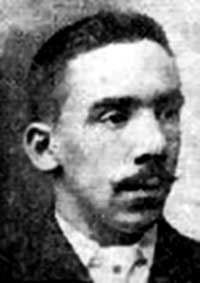
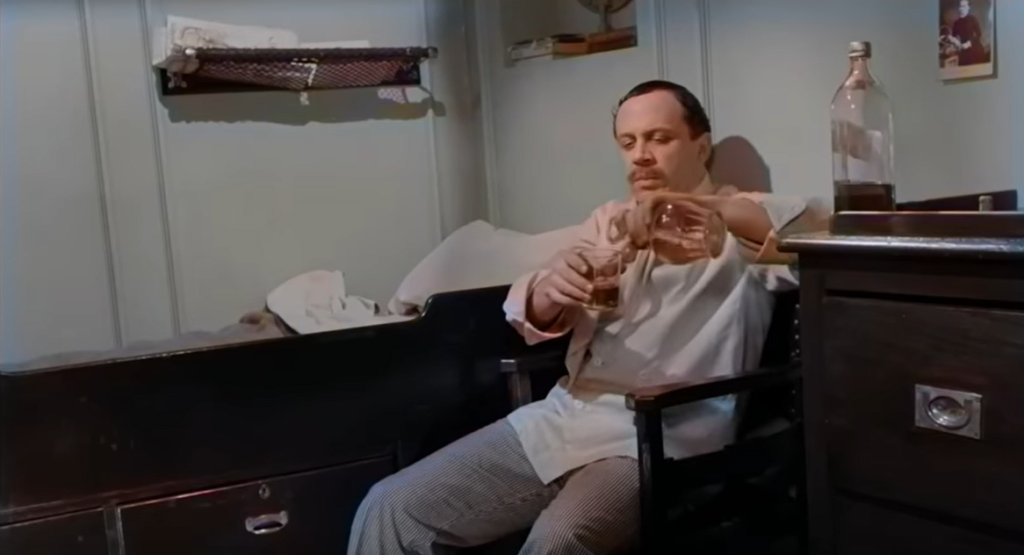
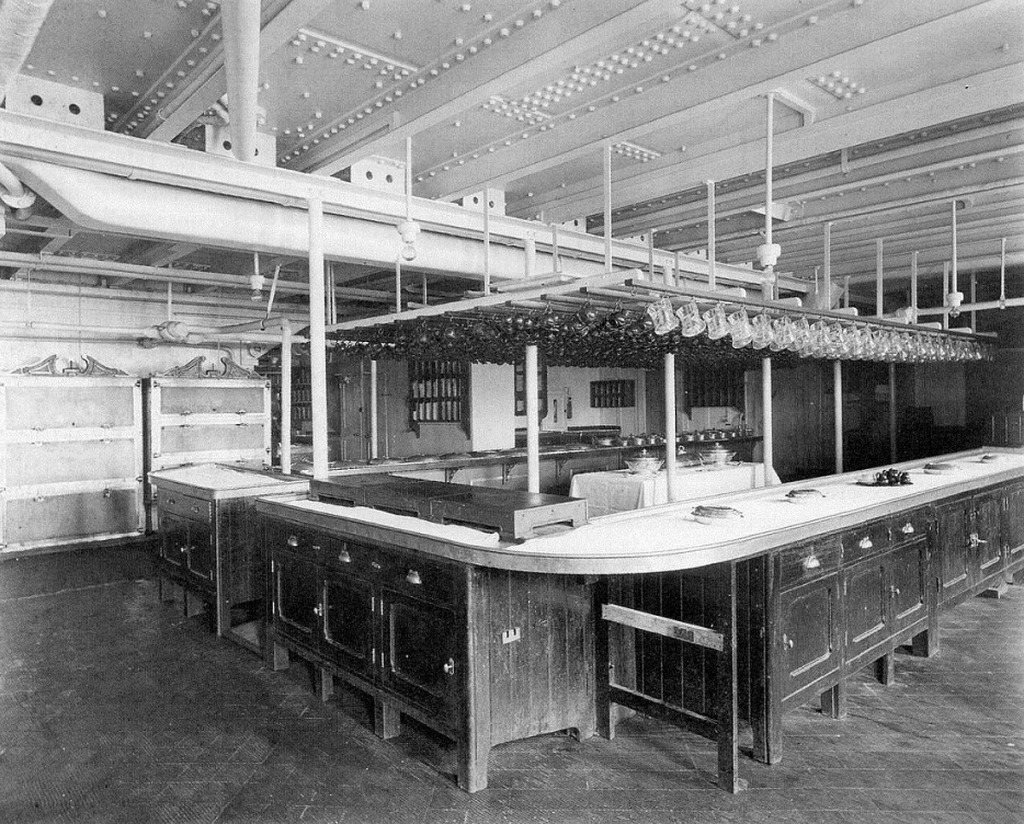
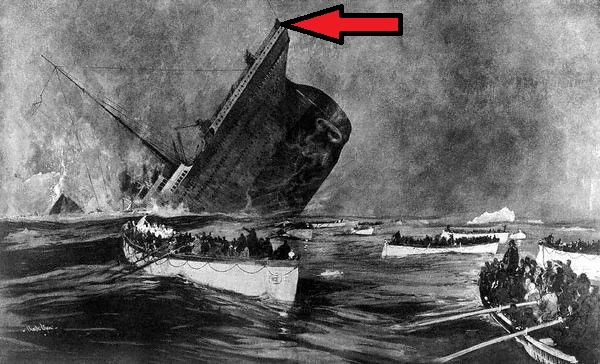



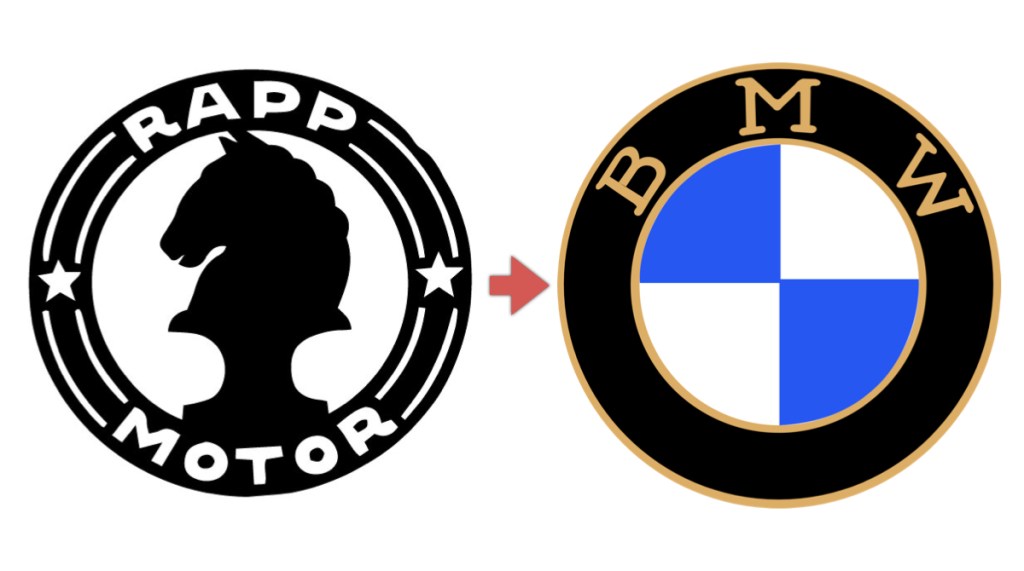





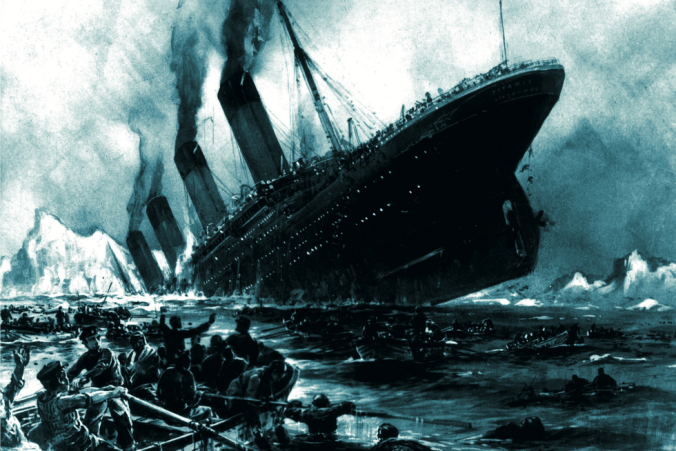


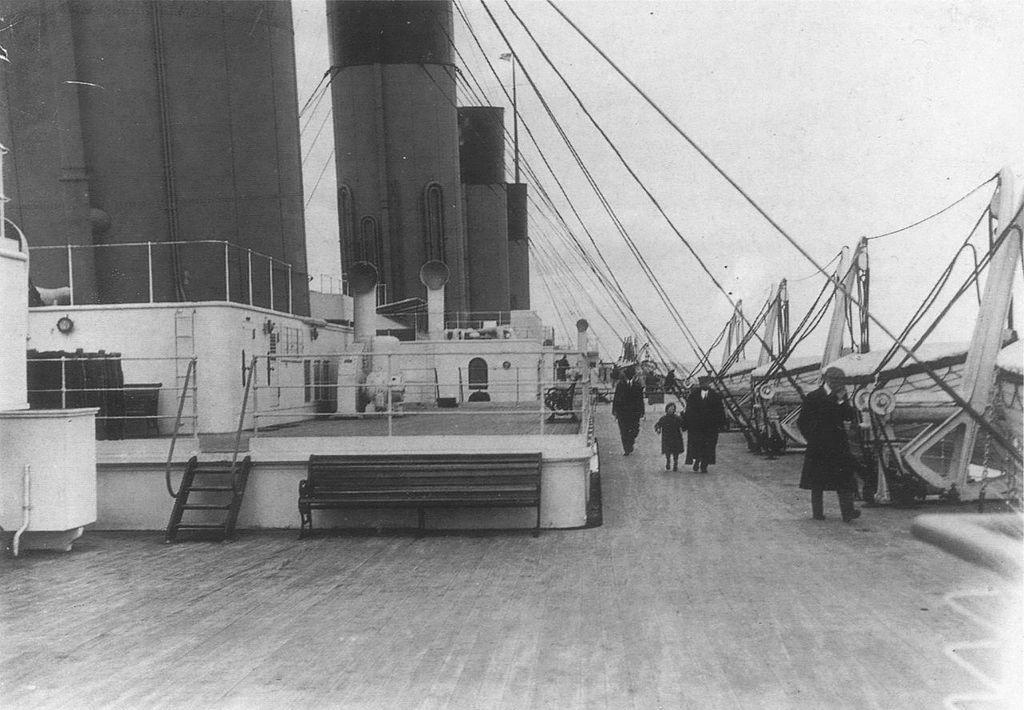
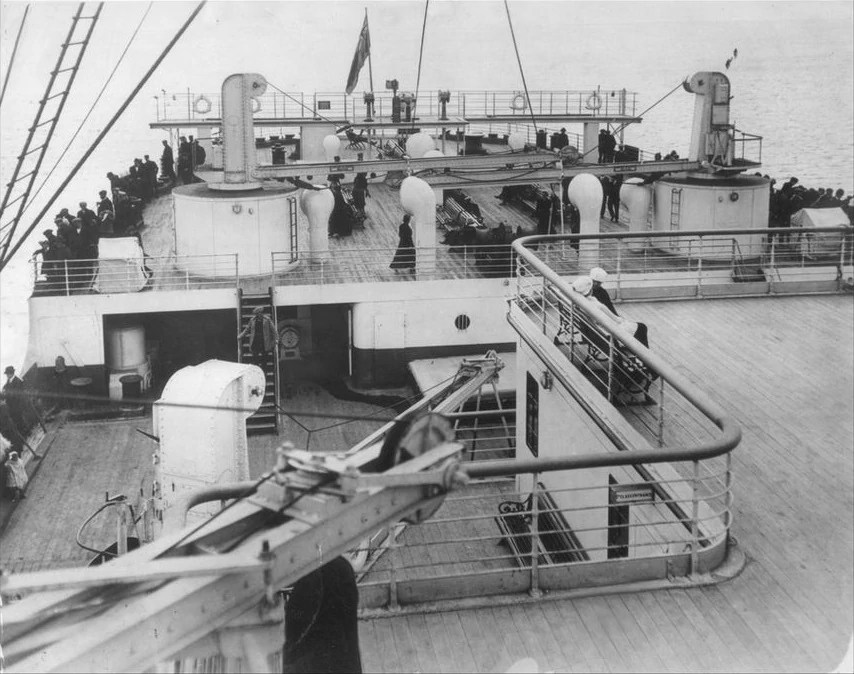

 Michael Averon